From Solo Adventures to Chatroom Co-op: Development Notes on the AI + YouTube Live RPG “UbiQuest”
26-06-01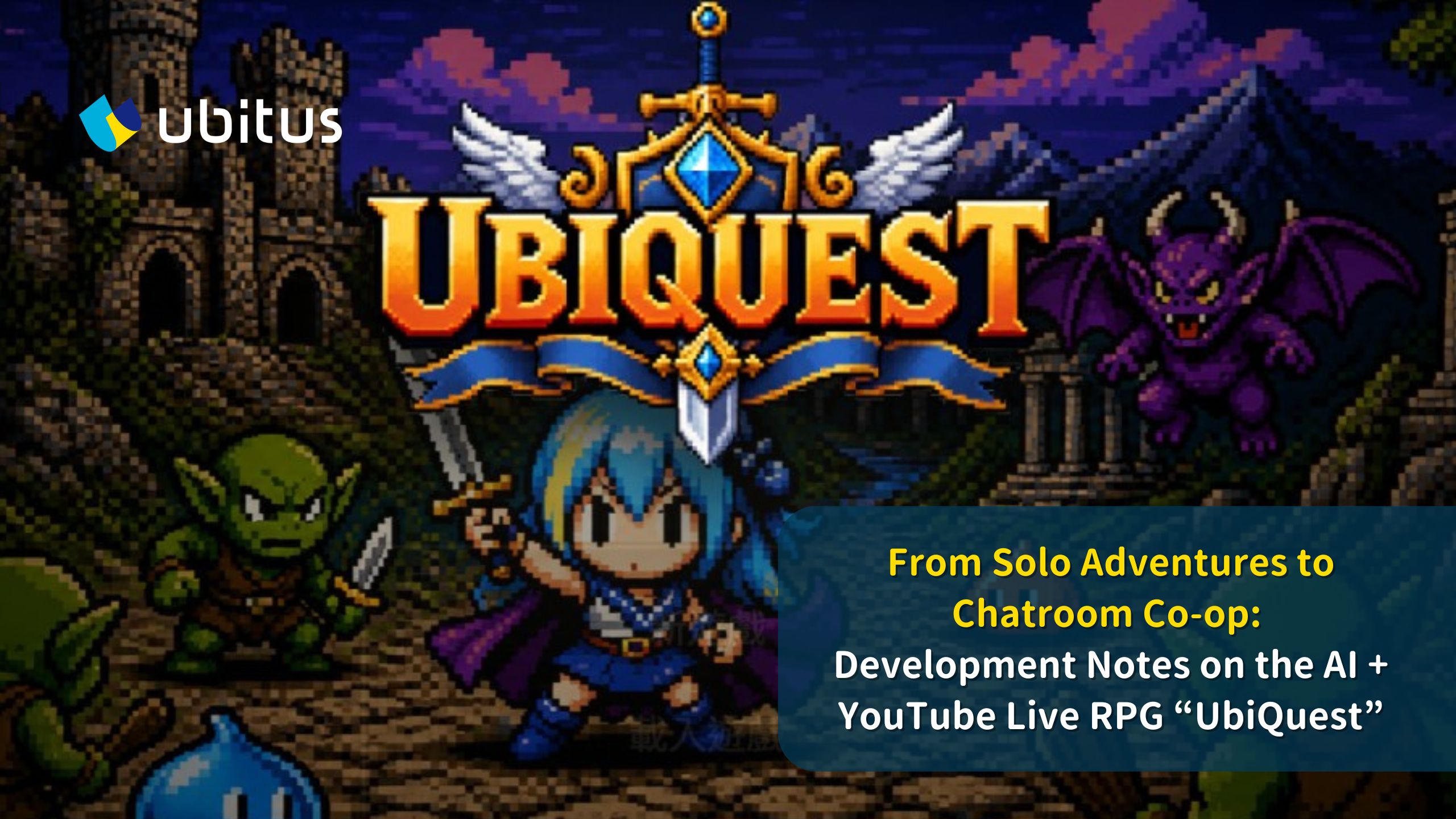
Author: Bull Hsu, Director of Business Development and Marketing, UBITUS
In traditional RPGs, players usually make choices alone, advance the story alone, and bear the results of battles alone. But what if we break down the concept of the “player” and allow YouTube live chat viewers to vote together, recruit together, fight together, and even let AI characters respond to viewer comments in real time? What would an RPG become?
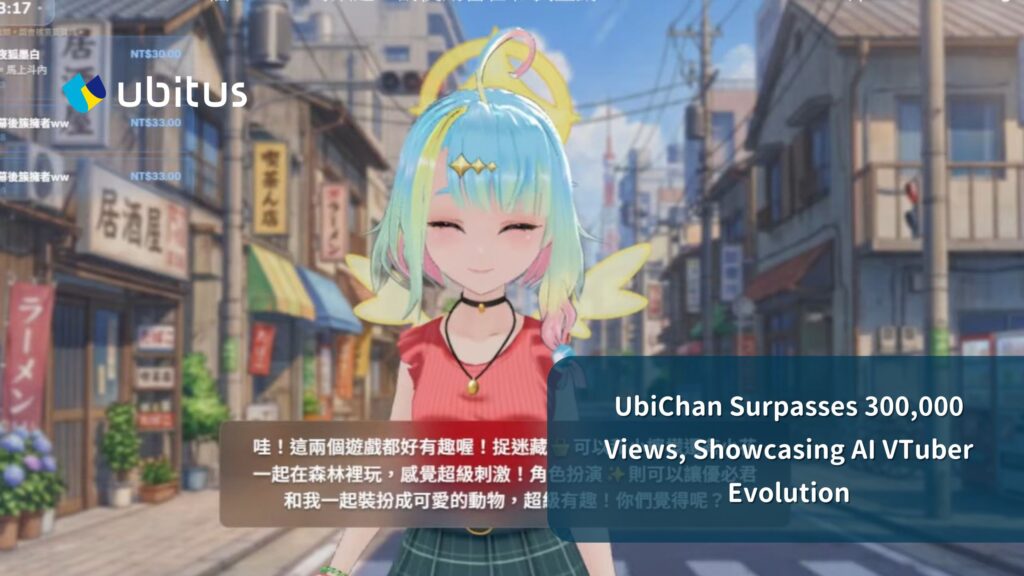
“UbiQuest,” created by Ubitus as an experimental project, is a game that combines AI, YouTube live interaction, and classic RPG structure. It is not simply an RPG being streamed online. Instead, it turns the chatroom itself into a game controller, transforming viewers from spectators into teammates. During the adventure, UbiChan can see, hear, and remember what happens in the live stream—and even chat and laugh with her teammates along the way.
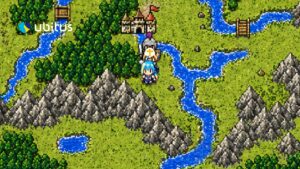
During development, our biggest takeaway was this: the challenge of an AI live-streamed game does not lie only in “content generation.” The real challenge is making real-time generation, multiplayer voting, RPG rules, and live-stream pacing work together at the same time.
Below are the four key points we found most meaningful during development.
Key Point 1: Turning YouTube Live Chat into an RPG Command Interface
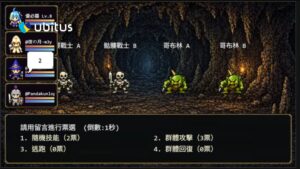
The core interaction of “UbiQuest” is allowing viewers to vote through YouTube live chat to decide the next action. In each round, the game generates options based on the current state, such as exploring, fighting, resting, recruiting, escaping, or using skills. After viewers enter numbers, the system tallies the results and advances the story.
This may sound simple, but in practice, it involves live-stream pacing design. If the voting time is too short, viewers will not have enough time to react. If it is too long, the RPG pacing becomes dragged out. There also cannot be too many options, or viewers may spend too much time thinking, making the game flow overly complex and slow.
For this reason, we made the number of voting options, countdown duration, no-vote handling, tie-vote handling, and random decision processes adjustable. This allows the game to strike a balance between being “playable” and “watchable.”
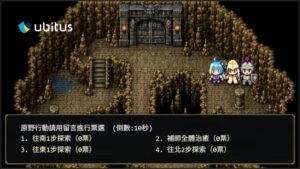
A live-streamed game is not simply replacing buttons with comments. It requires redesigning the concept of “waiting.” Viewers need time to participate, the AI streamer needs time to respond, and the game still needs to maintain a sense of progress. Achieving this requires repeated testing to find the right coordination between all elements.
Key Point 2: Letting Viewers Become Adventure Teammates, Not Just Voters
Traditional live-stream interactions often stop at comments, votes, or donation effects. But the most fascinating part of an RPG is the feeling of being part of a “party.” In “UbiQuest,” we added a recruitment system that gives live chat viewers the chance to become UbiChan’s companions and join the adventure together.
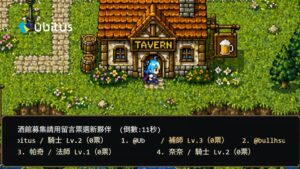
The party includes knights, mages, healers, and even hidden classes such as elf mages that can be unlocked as missions progress. Each role has its own position. Knights absorb damage, mages deliver high-risk damage output, and healers maintain the party’s endurance. As versions are updated, skills, MP recovery, counterattacks, weakness attacks, and boss mechanics are also gradually adjusted.
This means viewers are no longer just “helping the protagonist choose a path.” They begin to care about party composition, resource consumption, character survival, and battle results.
When viewers’ names appear in the party, their sense of participation increases instantly. As the party leader, UbiChan starts commanding viewer teammates and reminding each member of their role. The RPG’s numerical system becomes more than just game rules—it becomes an amplifier for social connection.
Key Point 3: AI Characters Must Speak in Real Time and Understand What Is Happening
UbiChan in “UbiQuest” is not a character with fixed lines. The system generates real-time dialogue through an LLM based on the current game state, recent chat messages, battle progress, and adventure events, then plays the dialogue using TTS voice. When viewers leave comments, send donations, or when the game enters a special state, UbiChan can respond in a way that feels more like a real streamer.
The challenge here is that AI cannot merely be good at chatting. It must know whether the game is currently in battle, whether the party is near defeat, who just left a comment, and how far the current mission has progressed. It also needs to avoid meaningless responses to simple voting numbers.
Therefore, we organized the game state into context that the LLM can understand, allowing AI responses to better match the live-stream situation.
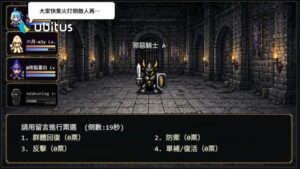
The charm of an AI character comes from “contextual response.” It is not difficult to generate a well-written line. What is difficult is making the character feel as if she is truly adventuring inside this live stream, reporting the game situation in real time with no delay, and chatting and laughing with viewers along the way.
Key Point 4: Long-Term Memory Prevents Every Stream from Starting Over
If the AI acts as if it is meeting the viewers for the first time every time a stream starts, it becomes difficult for the character to grow into a true virtual IP. Therefore, “UbiQuest” includes memory summaries and save mechanisms that organize important events, chat content, mission progress, and adventure results. When the game is loaded next time, UbiChan can continue the adventure from the previous context.
This mechanism also makes RPGs more suitable for serialized live streaming. Chapter One progresses from the village, plains, caves, and dungeons all the way to the boss battle, then expands further into the Whirlpool Ruins and the Chaos Corruptor. Each live stream can become part of the larger adventure rather than a one-time interactive demo.
The content of a live RPG is not a series of separate demos. It is a shared memory that can accumulate over time. When AI can remember what has happened, viewers are also more likely to look forward to returning next time.
From “Watching a Game” to “Adventuring Together”
The biggest lesson from developing “UbiQuest” was a renewed understanding of the nature of interaction in live-streamed games.
In the past, we often said that live streams were interactive, but most interactions still remained at the level of “viewers speak, and the streamer responds.” The possibility of an AI + YouTube live RPG is that viewer comments can truly enter the game rules and influence characters, battles, storylines, and memories.
It is also a challenge of technical integration. YouTube live chat reading, voting mechanisms, RPG state machines, character stat balancing, LLM dialogue, TTS voice, save data, and memory summaries all need to operate stably under the rhythm of a live stream. Each system may not be unfamiliar on its own, but connecting them into a playable live adventure is the truly difficult—and most interesting—part.
“UbiQuest” is still an evolving experiment, but it has already shown us a clear direction: future interactive content may not simply ask viewers to choose A or B. Instead, it may allow viewers to become part of the story together.
From “telling a story” to “co-creating an adventure,” this may be the most fascinating next step for AI live-streamed games.
About Ubitus
As a member of the NVIDIA Connect program, Ubitus leverages NVIDIA’s support and cutting-edge GPU technology to accelerate AI innovation. The company delivers advanced AI solutions, including UbiGPT (a large language model), UbiONE (an AI-powered avatar creation platform), and UbiArt (an image generation tool), providing customized solutions to meet the diverse needs of various industries.
As a cloud gaming pioneer, Ubitus enables Nintendo and other game companies to establish cloud gaming services and supports the global streaming of multimedia content, including interactive and virtual reality experiences.
Contact
TEL : +886-2-2717-6123 (Taipei)
+81-3-6435-3295 (Tokyo)
Media contact: pr@ubitus.ai
Business inquiry: contact@ubitus.ai
Website:www.ubitus.ai